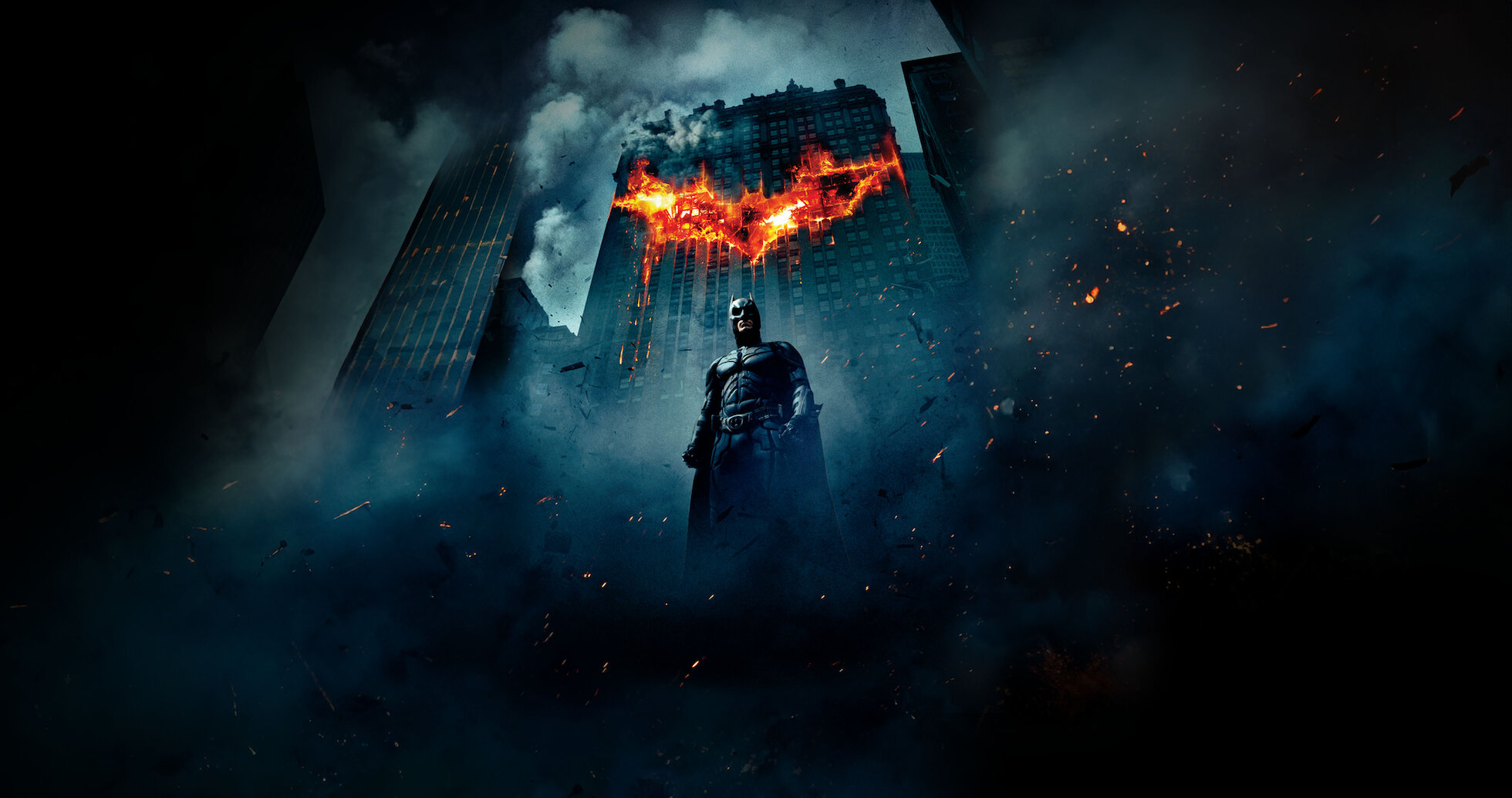
For this assignment, we were tasked with picking one scene from a classic movie from the given YouTube video. However, we were asked to analyze it without watching it beforehand. I chose The Dark Knight (2008) because I actually have not seen that movie.
- Analyze the camera work: Watch the scene with no volume. Look for the ways the camera tells and guides the story.
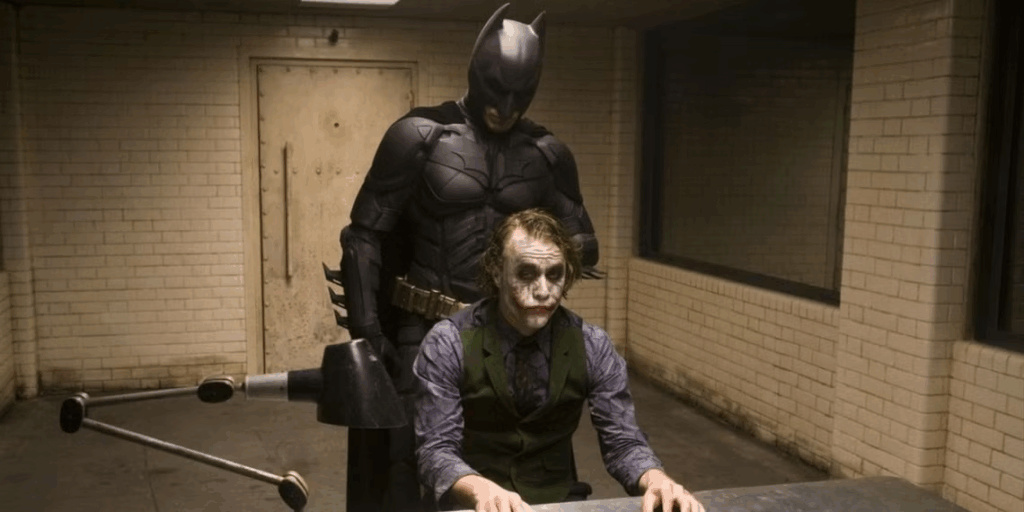
- The first thing I saw is that the scene is very shadowy, as the fluorescent lights of the room don’t meet the corners of the room. This matches the mood of the scene, dark and intense.
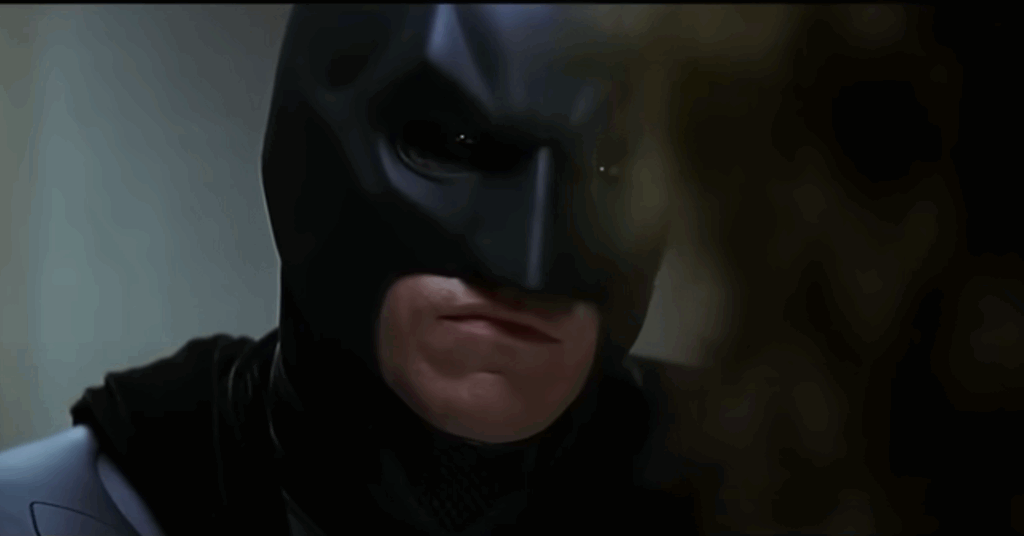
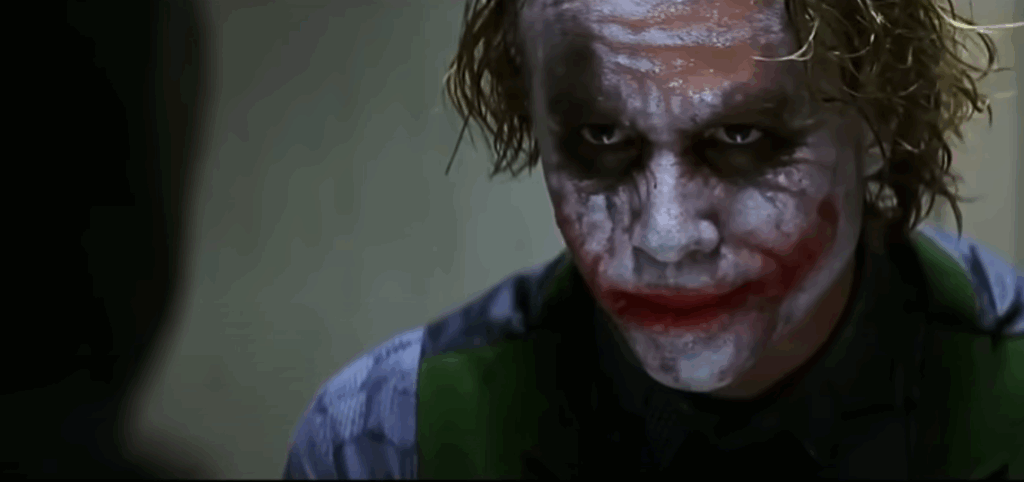
- The camera alternates between tight close-ups on The Joker and Batman, matching the dialogue of the characters.
- The Joker maintains a neutral expression on his face despite being pressured by Batman. However, when Batman lunges, the camera’s moves are sudden and disorienting, following the action of the scene.
2. Analyze the audio track: Now turn the volume up, but play it without looking at the screen. Take notes on the pacing of the dialogue, the spaces in the audio, and the use of music or sound effects.
- Batman’s entrance is silent at first, until he explodes in with sudden violence. For the majority of the scene, Batman’s dialogue is controlled with steady pacing and minimal emotional inflection. The Joker’s voice is immediately distinct: raspy, mocking, and unpredictable in tone and speed. His pacing shifts: sometimes slow and drawling, other times quick and clipped.
- Without looking at the video, I noticed there are key pauses in the audio: deliberate silences between Joker’s lines or before a response. Joker often lets his words hang.
- Chairs scraping, punches landing, and table slams are sharp and loud.
- The lack of music amplifies the tension in the room. Then, during the fight scene, an eerie rising electronic hum begins to play.
3. Put it all together: Finally, watch the scene as usual.
- Something I just noticed is that when the camera focuses on the Joker, you can see a sliver of the back of Batman’s head—and vice versa. It’s as if the camera is pulling the audience directly into each character’s headspace, forcing us into an uncomfortably intimate proximity with them.
- Also, Ebert argues that the left side of the frame is traditionally seen as “weaker,” while the right side is more “dominant.” When the Joker is placed on the right side of the frame (the “strong” side), it visually confirms he’s the one in control. Batman, on the other hand, often appears on the left, suggesting he’s not in command of the situation and is losing the upper-hand he usually has as the “hero.”
- There is no dramatic soundtrack for most of the scene—just raw sound: punches, footsteps, breathing.
- Camera movements only accelerates only when Batman loses control, not The Joker.
Ebert’s character placement theory, camera angle choices, lighting, and subtle framing cues don’t just support the story, they are the story. The visuals of the scene speaks just as loudly as the dialogue, making the audience feel the chaos and power struggle not just through words, but through where and how we’re forced to look.
Leave a Reply